
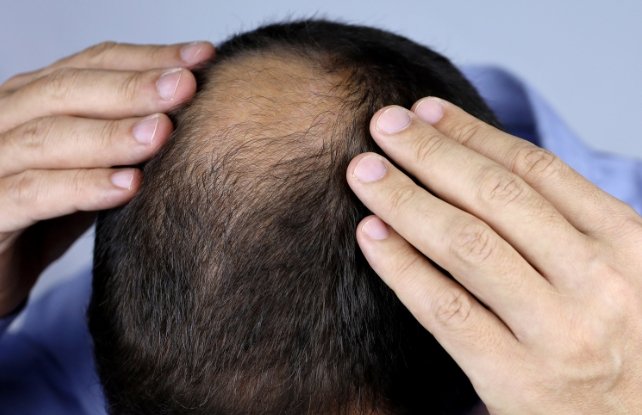
Hair regrowth may have taken a revolutionary turn in 2024, thanks to a surprising discovery involving a natural sugar called deoxyribose. Scientists from the University of Sheffield and COMSATS University in Pakistan found that this sugar—part of the DNA molecule—could trigger significant hair regrowth when applied as a topical gel.
The Accidental Discovery That Could Transform Hair Loss Treatment
The journey began with wound-healing studies on mice. Researchers noticed something unexpected: when deoxyribose gel was applied to skin lesions, not only did wounds heal faster, but hair began growing back quicker and thicker around the treated areas compared to untreated mice.
This prompted further investigation.
Deoxyribose Gel vs. Minoxidil: Comparable Hair Regrowth Results
In a June 2024 study published in Frontiers in Pharmacology, researchers tested the sugar gel on male mice with testosterone-induced hair loss, mimicking male-pattern baldness. Each day, a small dose of deoxyribose gel was applied to hairless areas on the mice’s backs.
Within 20 days, the results were striking: 80–90% hair regrowth was observed. Long, thick fur sprouted—comparable to results seen with minoxidil, a widely used FDA-approved treatment for hair loss.
“Our research suggests that the answer to treating hair loss might be as simple as using a naturally occurring deoxyribose sugar to boost the blood supply to the hair follicles,” said Professor Sheila MacNeil of the University of Sheffield.

Why Deoxyribose May Be the Future of Hair Regrowth
The exact mechanism is still under investigation, but scientists observed an increase in blood vessels and skin cells around the treated area. Enhanced blood flow likely nourishes hair follicles, promoting healthier and denser hair regrowth.
This could open the door to new treatments not only for androgenetic alopecia (hereditary-patterned baldness), but also for eyebrow, eyelash, and post-chemotherapy hair regrowth.
A Safer Alternative to Traditional Hair Loss Medications?
Currently, only minoxidil and finasteride are FDA-approved for hereditary hair loss. While effective for some, they aren’t suitable for everyone. Finasteride, in particular, is associated with side effects like reduced libido, erectile dysfunction, and mood disturbances—and is not approved for women.
A natural, biodegradable sugar-based gel could offer a safer alternative with fewer side effects, although human trials are still needed.
What’s Next for Hair Regrowth Research?
So far, the deoxyribose gel has only been tested on male mice, but future studies may explore its potential in female subjects and even in humans. Researchers emphasize that the work is in its early stages, but results are highly promising.
“This is a badly under-researched area, and hence new approaches are needed,” said lead author Muhammad Anjum of COMSATS.
Final Thoughts: Is Deoxyribose the Future of Hair Regrowth?
If ongoing research confirms the effectiveness of deoxyribose gel in humans, we could be entering a new era of natural hair regrowth treatments—one that’s safe, affordable, and widely accessible. For the millions battling hair loss globally, this discovery offers real hope.
Stay tuned as the science of hair regrowth evolves—2024 may be the year we saw the first step toward a natural cure for baldness.
Struggling with hair loss or thinning?
Get results with our 90-Day Hair Restoration Regimen—backed by science and proven methods. This e-book gives you a step-by-step plan to restore thicker, healthier hair naturally. Ready for real change?
Download now at Otter Hair Labs and start your journey to regrowth today.
