
Most people losing hair already know DHT is involved. What they want to know is whether they can do anything about it without taking finasteride.
The short answer: yes, to a modest degree. Certain foods contain compounds that inhibit 5-alpha reductase, the enzyme that converts testosterone into DHT, or that reduce DHT’s ability to bind to hair follicle receptors. The effect size is smaller than pharmaceuticals. But the evidence is real, and for people who want a drug-free starting point, it is worth understanding.
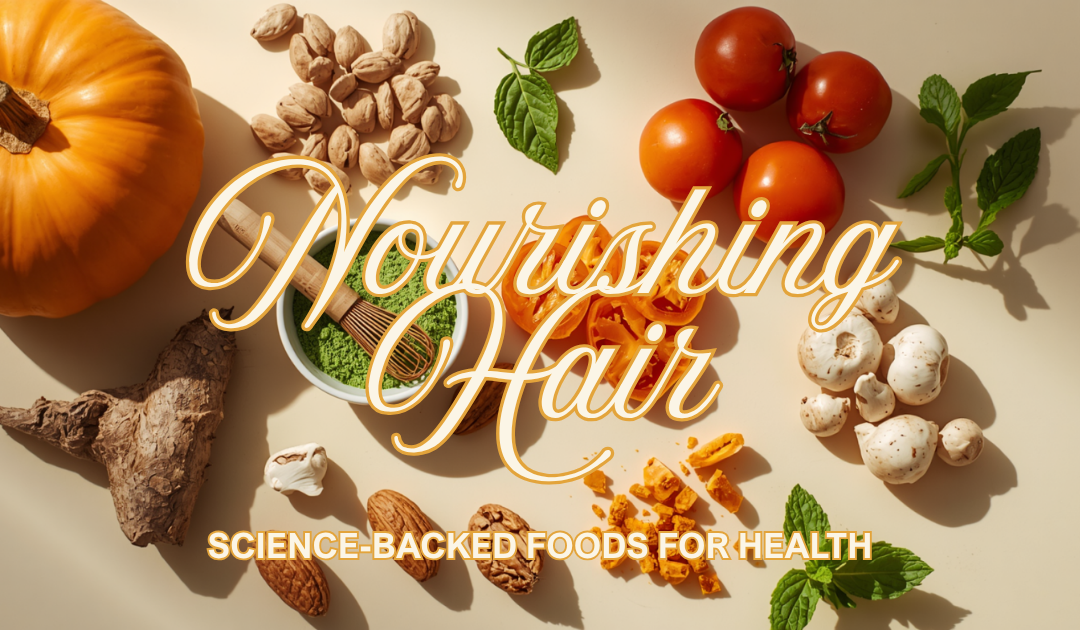
Here are the eight natural DHT blockers with the strongest scientific backing.
How DHT Damages Hair Follicles
DHT binds to androgen receptors in genetically sensitive hair follicles. Over time, this causes the follicle to miniaturise: it produces progressively thinner, shorter hairs until it stops producing hair altogether. This process drives the majority of male pattern baldness and a significant portion of female hair thinning.
Two enzymes convert testosterone to DHT: Type I 5-alpha reductase (found in skin and liver) and Type II (concentrated in the scalp and prostate). Most natural DHT blockers target Type II. That is also what finasteride blocks pharmacologically.
1. Pumpkin Seeds
Pumpkin seeds are the most well-evidenced food-based DHT blocker available.
A 2014 randomised, placebo-controlled trial published in Evidence-Based Complementary and Alternative Medicine tested pumpkin seed oil supplementation in men with androgenetic alopecia over 24 weeks. The pumpkin seed oil group saw a 40% increase in hair count. The placebo group saw 10%.
The researchers attributed the effect to beta-sitosterol, a phytosterol that inhibits Type II 5-alpha reductase. A daily handful of raw pumpkin seeds (roughly 30g) delivers a meaningful dose. Pumpkin seed oil is also one of the active ingredients in a DIY hair regrowth oil formula worth considering if topical application interests you.
2. Green Tea (EGCG)
Green tea contains epigallocatechin gallate, known as EGCG. It inhibits 5-alpha reductase activity in vitro and has shown hair growth-promoting effects in human follicle cultures (Journal of Investigative Dermatology, 2007).
EGCG also has anti-inflammatory and antioxidant properties, both of which support follicle health independently of DHT reduction. Two to three cups per day is reasonable. Matcha delivers roughly four to six times the EGCG concentration of standard brewed green tea, so one strong matcha cup serves a similar purpose.
3. Lycopene-Rich Foods (Tomatoes)
Lycopene is a carotenoid found in tomatoes, watermelon, guava, and pink grapefruit. Multiple studies have documented its 5-alpha reductase inhibitory activity, particularly against Type II.
One practical note: cooked tomatoes deliver more bioavailable lycopene than raw ones. Heat processing breaks down cell walls and increases absorption significantly. Two to three servings of cooked tomato products per week, such as tomato paste or passata, builds a consistent dietary source without any real effort.
4. Turmeric
The active compound in turmeric, curcumin, suppresses 5-alpha reductase Type II activity. A 2012 study in Biological and Pharmaceutical Bulletin found that curcumin inhibited DHT-stimulated cell proliferation by targeting this enzyme.
Curcumin absorbs poorly on its own. Combining it with black pepper (piperine) increases bioavailability by up to 2,000%, according to research published in Planta Medica in 1998. Turmeric in food provides modest doses. Dedicated curcumin supplements with piperine deliver the amounts used in studies.
5. Soy and Edamame
Soy isoflavones have mild anti-androgenic properties through two mechanisms: weak 5-alpha reductase inhibition and competition with androgens at receptor sites. A 2007 study found men consuming soy protein daily showed measurably reduced free DHT levels after four weeks.
The effect is real but moderate. Fermented soy products, such as tempeh and miso, appear to offer higher bioavailable isoflavone content than processed soy protein. Edamame and tofu are the simplest whole food sources.
6. White Button Mushrooms
White button mushrooms are natural aromatase inhibitors. They shift the testosterone-to-oestrogen ratio in a way that reduces androgenic load on hair follicles.
They also contain L-ergothioneine, a stable antioxidant that protects follicle cells from oxidative stress, a secondary but confirmed contributor to premature follicle miniaturisation. Including mushrooms several times per week costs nothing and adds a documented biological benefit.
7. Walnuts and Almonds
Both nuts contain L-lysine, an amino acid identified in studies as competing with DHT for receptor binding sites on hair follicles. L-lysine itself has been studied as a standalone supplement for hair loss with positive results in women (Clinical and Experimental Dermatology, 2002).
Walnuts add omega-3 fatty acids (ALA), zinc, and selenium. Zinc directly regulates 5-alpha reductase activity. Low zinc levels upregulate the enzyme, while adequate zinc intake helps keep DHT production in check. A small daily handful of each covers the relevant dose range from both nuts.
8. Spearmint
Spearmint has documented anti-androgenic properties. A 2010 randomised controlled trial published in Phytotherapy Research tested spearmint tea in women with hyperandrogenism and found significant reductions in free testosterone levels after 30 days.
The mechanism involves direct inhibition of 5-alpha reductase and a reduction in circulating androgen levels. Two cups of spearmint tea daily is the dose used in the research. Fresh spearmint leaves steeped in hot water works. So does dried spearmint from any supermarket.
How to Put This Into Practice
None of these foods work as fast as finasteride. None of them will regrow hair that has already been lost to severe miniaturisation. What they can do is reduce the DHT load your follicles are exposed to over time, which matters most in the early and middle stages of pattern hair loss.
The most practical approach is stacking. Pumpkin seeds and green tea daily. Tomato-based meals several times a week. Turmeric with black pepper in cooking. These are not dramatic interventions. They are consistent, low-effort inputs that shift the biochemical environment in the right direction.
If you want to build a more complete protocol, the Otter Hair Labs 90-day regrowth system combines dietary strategies like these with topical and supplementation layers that address hair loss from multiple angles simultaneously.