
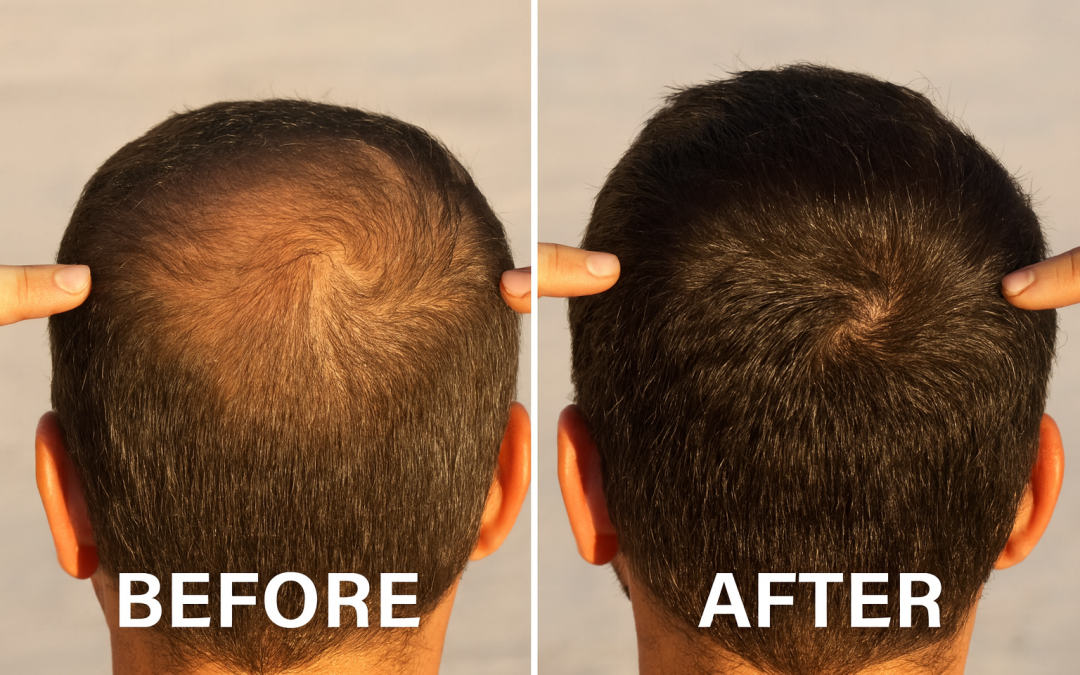
PP405 is a game changer!
After decades of only slowing hair loss with minoxidil and finasteride—or relying on pricey transplants—the buzz today is about a potential game-changer: PP405. Developed by UCLA researchers and being tested by Pelage Pharmaceuticals, this small-molecule topical therapy aims to reactivate dormant hair follicles. Unlike all current solutions, it doesn’t just pause hair loss—it attempts to reverse it. Let’s unpack what PP405 is, how it works, where it stands in trials, and whether it might deliver on its hype.
What’s PP405 and How Does It Work?
- Origins: UCLA researchers, led by study teams including William Lowry, spent nearly a decade investigating hair follicle stem-cell behavior. Eventually, they isolated PP405—a molecule designed to wake up sleeper stem cells in the scalp. UCLA New York Post El HuffPost Life Sciences
- Mechanism: PP405 appears to target a metabolic checkpoint—the mitochondrial pyruvate carrier (MPC)—that keeps follicles dormant. By inhibiting this pathway, it sparks follicle re-entry into the active (anagen) growth phase.DirectPayNet New York Magazine Wikipedia IK Clinics
- Why it matters: Most current treatments—minoxidil boosts blood flow, finasteride suppresses DHT—only salvage struggling follicles. PP405, however, reactivates follicles thought to be “dead.” Initial findings even suggest it may produce dense, pigmented “terminal” hairs—not wispy peach fuzz. New York Post UCLA New York Magazine
Where It Stands: Clinical Progress?
Early Human Trials (2023)
- In a very limited pilot trial, participants applied PP405 nightly for about a week.
- Results: “Statistically significant” hair growth, and notably terminal hair, not fine fuzz. UCLANew York Post
Phase 2a (2025)
- Pelage Pharmaceuticals ran a randomized, double‑blind, placebo-controlled Phase 2a trial.
- Results: After eight weeks, about 31 % of men treated with PP405 saw over 20 % increase in hair density—compared to zero in the placebo group. Results came with no systemic absorption and were well-tolerated. Dermatology Times The Dermatology Digest Drug Topics The Washington Post
- The therapy targets foundational biological pathways, not secondary markers. That’s rare for early-stage hair loss treatments. Drug Topics
- Next steps: A Phase 3 trial is planned for 2026, with hopes of market release estimated around 2028–2030, depending on results and approval. New York Magazine Dermatology Times Reddit
Why People Are Hooked — Reddit’s “Tressless” Reactions
On the popular r/Tressless subreddit, anticipation is off the charts. One user joked:
“Sprinkle that PP405 on my scalp like I sprinkle salt on my steak.”
— And another: “BLESS PELAGE AND BLESS PP405 GIVE ME THAT SHIT RIGHT NOW.” New York Magazine
It’s a community starved for a real solution—and hopeful signs are fueling optimism.
The Big Picture—Where PP405 Fits in the Existing Landscape
Today’s Options
| Treatment | Mechanism | Availability | Limitations |
| Minoxidil | Increases scalp blood flow | OTC, FDA-approved | Requires daily use—only slows loss |
| Finasteride | Blocks DHT hormone | Prescription | Side effects, mostly for men |
| Hair transplant | Surgical relocation of follicles | Widely available | Costly, invasive, not suited for diffuse or early loss |
These methods either preserve what’s left or offer surgical density—but none reawaken dormant follicles. New York Post The Washington Post Advanced Hair Restoration New York Magazine
PP405’s Advantage
- Targets follicle stem cells at their deepest level
- Potential to regrow lost hair—even in previously bald spots
- Early trials show both efficacy and safety
- May be usable alongside existing treatments as a combo therapy New York Post New York Magazine
But… Let’s Not Get Ahead of Ourselves
Experts urge a measured approach:
- Still experimental: Even with strong early data, PP405 is not FDA‑approved, and availability is years away. Advanced Hair Restoration The Washington Post New York Magazine
- Long-term unknowns: We need data on sustained effects, durability beyond 8 weeks, and whether continuous use is essential. The Washington Post
- Partial responders: In Phase 2a, only ~31 % saw significant density increases. That means not everyone responded—and dosing, formulations, and demographics may still matter. Dermatology Times The Dermatology Digest The Washington Post
- Regulatory risk: Market availability will hinge on trial performance and regulatory review. Many promising drugs never make it beyond Phase 3.DirectPayNetNew York Magazine
Still, It’s a Paradigm Shift
If PP405 can truly reawaken hair follicles, especially in areas considered permanently bald, it would be a scientific breakthrough – on par with Viagra’s reinvention of erectile treatment. Early signs are promising, and science is sound.
Longer term, this may open the door to regenerative dermatology—treating conditions at the cellular level rather than managing symptoms.
Bottom Line: Should You Hold Off Until PP405?
If You’re Experiencing Hair Loss Now:
- Don’t wait years for a drug that may or may not arrive.
- Stick with proven options:
- Minoxidil (topical, daily)
- Finasteride (oral, men only, with doctor oversight)
- Hair transplant if you qualify
- Supplements, PRP, laser therapy—possible adjuncts, but secondary support. New York Post The Washington Post
- Start early. Experts stress that earlier intervention often brings the best results. The Washington Post
If You’re Curious About PP405:
- Watch clinical trial updates, especially starting 2026.
- Follow peer-reviewed publications and FDA filings.
- Be skeptical of any DIY versions or black-market alternatives, they’re risky and untested. New York Magazine
In Summary
- PP405 is different—it revives dormant follicles rather than slowing hair loss.
- Early trials are promising—Phase 2a shows safety and measurable density gains.
- Availability is years out, pending Phase 3 and regulatory reviews.
- Not everyone responds, and long-term data is missing.
- Don’t pause proven strategies now—stay proactive with current treatments.
- Hope – yes. But caution—also a must.
This may turn into the hair-restoration revolution—if the science and trials hold. But until then, don’t sideline what already works. Keep tabs on PP405, stay grounded, and take control of your hair health with what’s reliable and available today.
Struggling with hair loss or thinning?
Get results with our 90-Day Hair Restoration Regimen—backed by science and proven methods. This e-book gives you a step-by-step plan to restore thicker, healthier hair naturally. Ready for real change?
Download now at Otter Hair Labs and start your journey to regrowth today.
