

Deoxyribose sugar is a five-carbon (pentose) sugar that is a fundamental building block of DNA, forming the sugar-phosphate backbone of the molecule. It is a deoxy sugar, meaning it’s a form of sugar ribose where a hydroxyl group has been replaced by a hydrogen atom.
Suddenly, deoxyribose sugar is now considered as the game changer for hair regrowth.
A study on wound healing, led by researchers at the University of Sheffield in the UK and COMSATS University in Pakistan, earlier this year made a remarkable discovery that can prove to be a potential new treatment for hereditary-patterned baldness-a disorder that has affected millions across the world.
Introduction: A Surprising Discovery in Hair Science
In 2024, researchers at the University of Sheffield (UK) and COMSATS University (Pakistan) made an accidental breakthrough. They weren’t hunting for a hair-loss cure—they were studying wound healing in mice using a natural sugar called deoxyribose. But what they found was astonishing: the fur around treated wounds regrew significantly faster than in untreated areas. That discovery sparked research that may reshape our understanding of hair regrowth. sheffield.ac.uk ScienceAlert New York Post
Their findings, published in Frontiers in Pharmacology in June 2024, showed that a gel containing 2-deoxy-D-ribose (2dDR)—one form of deoxyribose—stimulated hair regrowth in a mouse model of androgenetic alopecia. The results were remarkable: 80–90% as effective as Minoxidil, the leading over-the-counter treatment, with no added benefit from combining the two. sheffield.ac.uk ScienceAlert PubMed Futura
Let’s break down what this means—and where the hurdles ahead lie.
What Is Deoxyribose?
- Monosaccharide & Pentose: Deoxyribose is a simple, five-carbon sugar.
- Deoxy Sugar: It’s basically ribose missing one oxygen atom—the “deoxy” designation.
- DNA’s Backbone: It forms the sugar-phosphate backbone of DNA, giving structure to our genetic code. Wikipedia
Sometimes referred to as 2‑deoxy‑D‑ribose (or “2dDR”), this molecule plays vital roles in biochemical processes. But until now, its impact on hair health has been entirely unexpected.
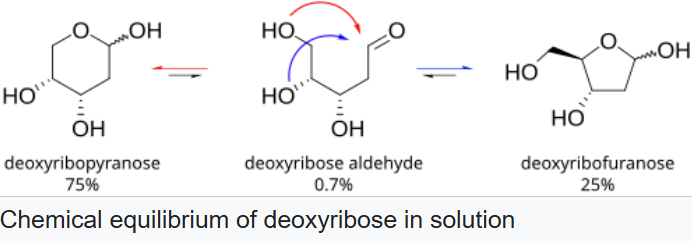
The Path from Wound Healing to Hair Regrowth
This discovery sprang from studies into wound healing, where 2dDR was found to promote angiogenesis—the formation of new blood vessels. Enhanced blood flow is critical not only for healing wounds but also for nourishing hair follicles. Perfect Hair Health PubMed sheffield.ac.uk
When researchers observed thicker, faster fur regrowth around treated wounds, they zoomed in on hair-specific effects by reproducing hair loss in mice using testosterone—a close match for human male pattern baldness. The subsequent experiments directly applied a biodegradable, non-toxic 2dDR gel to these mice. ScienceAlert Futura PubMed
Within just a few weeks, the drug-free sugar solution prompted robust hair regrowth, matching results achieved with Minoxidil—except without known side effects. ScienceAlert Futura PubMed
In-Depth Findings from the Frontiers Study
The Frontiers in Pharmacology study (Anjum et al., June 3, 2024) offers a rich trove of data:
- Experimental Setup: C57BL/6 mice were induced with androgenetic alopecia via testosterone injections. They were split into groups: untreated control, testosterone only, blank gel, 2dDR gel, Minoxidil, and a combination gel. Treatments lasted 20 days. PubMed PMC
- Hair Regrowth Metrics:
- Hair length, shaft diameter, and follicle density improved significantly in the 2dDR group—on par with Minoxidil-treated mice.
- The anagen/telogen ratio (growth-phase hair follicles vs resting phase) increased markedly.
- Hair bulb diameter and melanin-enriched area expanded, indicating active pigmentation and growth.
- Vascularization around follicles surged—demonstrating enhanced blood supply. PubMed PMC
- Combination Therapy: Surprisingly, combining 2dDR with Minoxidil didn’t yield statistically significant improvements over either treatment alone. PubMed PMC
Conclusion: 2dDR alone appears as effective as Minoxidil in this mouse model—and may operate through improving vascular support to hair follicles. PubMed
What Makes 2dDR Special?
Feature | Observation |
Natural & Stable | It’s a naturally occurring, inexpensive, and stable molecule. sheffield.ac.uk+1 |
Low Side-Effect Risk | Initial tests showed no noticeable side effects, offering an edge over finasteride. Perfect Hair Health New York Post Futura |
Non-Invasive Delivery | Administered topically via gel, easy to use compared to oral drugs or injections. |
Angiogenic Mechanism | Encourages blood vessel growth, filling a niche with other treatments like PRP or growth factors. |
Treatment Scope Potential | May be useful not only for pattern baldness but also chemotherapy-induced hair loss. New York Post PubMed |
Hurdles & Limitations
Despite the enthusiasm, there are significant caveats:
- Mice vs. Humans: Human hair growth cycles differ greatly from mice. Positive results in mice don’t guarantee effectiveness in humans. Perfect Hair HealthPMC
- No Human Trials Yet: Clinical trials on safety and efficacy in humans haven’t been conducted. Regulatory approval is still years away. Perfect Hair Health+1 sheffield.ac.uk
- Limited Data: So far, only one peer-reviewed study exists. We need replication, broader models, and long-term data.
- Commercial Oversight: The University of Sheffield explicitly states they do not endorse any commercial applications yet. Perfect Hair Health
Looking Ahead: What’s Next?
- Human Clinical Trials
Because the findings are compelling, rigorous human trials are urgently needed to assess safety, dosage, and efficacy. - Mechanism Investigation
Researchers must clarify how exactly 2dDR triggers angiogenesis and hair follicle activation. - Comparison & Combination Studies
Comparative studies with Minoxidil, finasteride, PRP, or low-level laser therapy will help place 2dDR in context. - Commercial Development with Caution
Given the publicized interest, developers should proceed with transparency, supported by peer-reviewed data and regulatory oversight.
Final Take: Sweet Promise, Cautious Excitement
Deoxyribose—the sugar backbone of DNA—has unexpectedly emerged as a promising candidate for hair regrowth. In mice, 2-deoxy-D-ribose performed on par with Minoxidil, enhancing follicle growth and vascular support, with no obvious safety concerns. All signs point toward a natural, non-invasive treatment that could revolutionize how we approach androgenetic alopecia.
But for now, science remains in the early stage. Human trials, mechanistic clarity, and regulatory validation are missing. The hype is real—but prudence is just as critical.
If 2dDR continues to show promise, it might one day stand as a safe, widely accessible, and side-effect-light alternative—or complement—to current hair treatments. Until then, though, it’s firmly on the horizon—not in the medicine cabinet.
To know more about Deoxyribose Sugar, refer below:
- University of Sheffield & COMSATS study summary. sheffield.ac.uk+1
- ScienceAlert’s coverage of the sugar gel results.ScienceAlert+1
- Frontiers in Pharmacology full findings. PubMed Frontiers
- Discussion of translational cautions. Perfect Hair HealthPMC
- Media reports on the implications and potential.New York PostFutura
Struggling with hair loss or thinning?
Get results with our 90-Day Hair Restoration Regimen—backed by science and proven methods. This e-book gives you a step-by-step plan to restore thicker, healthier hair naturally. Ready for real change?
Download now at Otter Hair Labs and start your journey to regrowth today.
