

Fatty Acids for Hair Growth: From “Healthy Omegas” to a Surprising Hypertrichosis Hack
Most of us have heard that omega-3 and omega-6 fatty acids support hair by cooling inflammation, nourishing follicles, and nudging density in the right direction. That is the standard wellness story.
This article is about something very different, and honestly a lot more dramatic: hypertrichosis-like regrowth triggered by fatty acids released after mild skin injury. In plain English: when the skin gets irritated, immune cells talk to nearby fat cells, those fat cells release certain fatty acids, and those fatty acids can “wake up” hair follicle stem cells.
In mice, this chain reaction brought bare skin back to fluff in days, not months. The same team then skipped the irritation step and got similar results by rubbing on a serum rich in two specific monounsaturated fatty acids, oleic acid and palmitoleic acid. Early days, yes, but the biology is clever and the data are intriguing. Cell
Below, we’ll keep it casual but thorough: what hypertrichosis actually is, how injury can kick off a fatty-acid signal that reboots follicles, what these fatty acids are, why sodium dodecyl sulfate shows up in this story, how the research is progressing, and what a realistic timeline looks like for any future product.
What is hypertrichosis?
Hypertrichosis is excessive hair growth anywhere on the body. It can be congenital, meaning present at birth, or acquired, meaning it appears later in life. It’s not the same as hirsutism, which refers to androgen-pattern hair growth in women.
Hypertrichosis can be generalized or localized, can involve vellus or terminal hairs, and can be triggered by genetic conditions, drugs, or underlying disease. NCBI
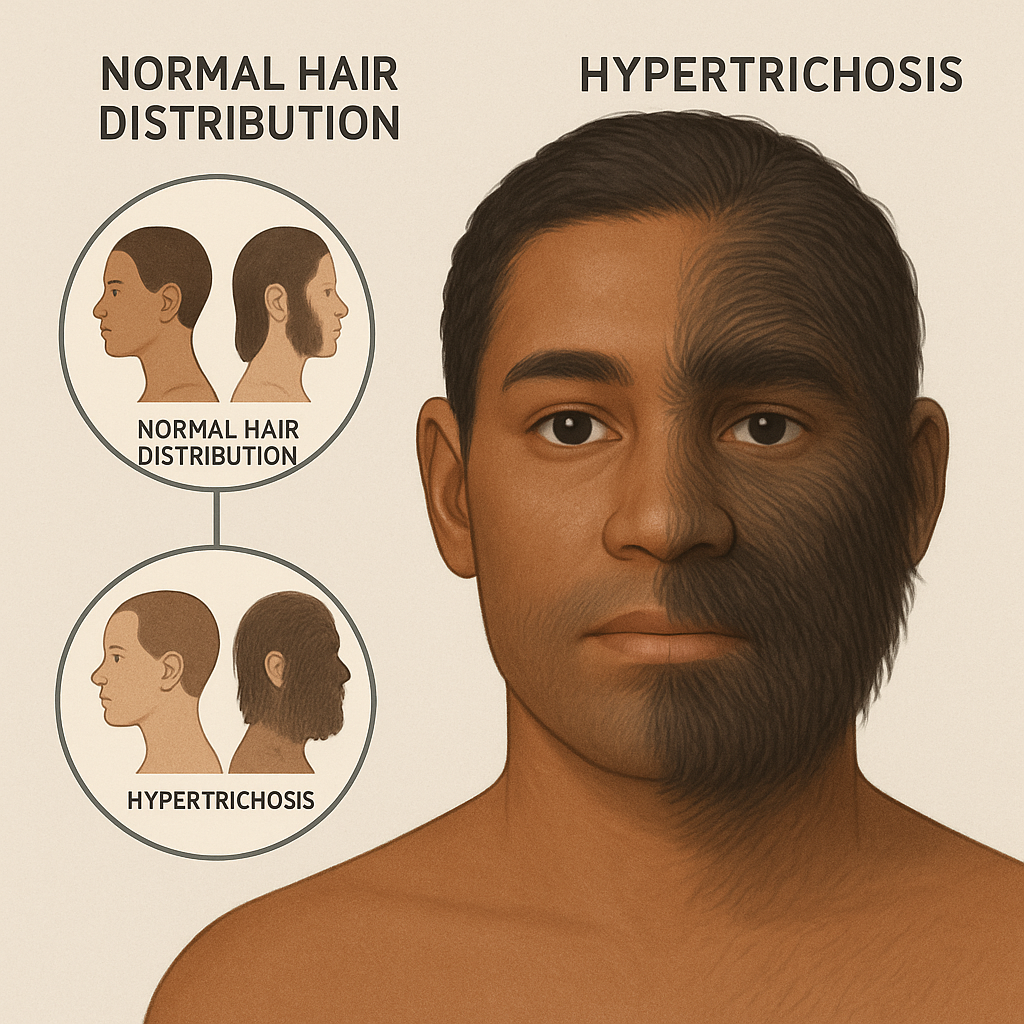
People sometimes notice this phenomenon around scars, eczema patches, or treated skin. That observation isn’t new, but the mechanism was fuzzy. The latest research from National Taiwan University nails down a detailed pathway connecting skin injury, immune cell signaling, adipose tissue right under the skin, and the hair follicle’s own stem cells. Cell
What’s the latest?
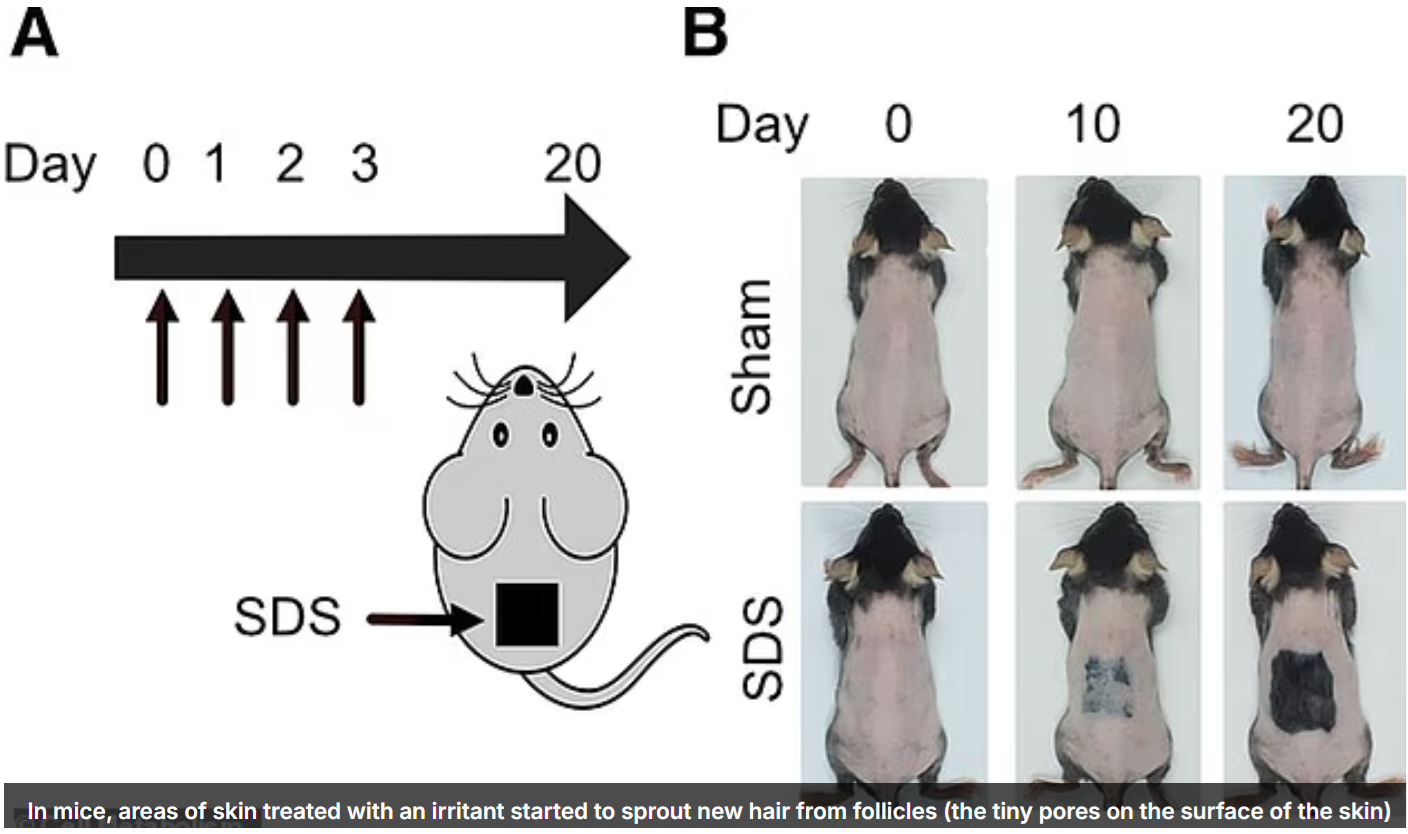
A 2025 paper in Cell Metabolism showed that mild skin injury in mice quickly recruits macrophages into dermal adipose tissue. Those macrophages prompt nearby adipocytes to release free fatty acids.
The released fatty acids are then taken up by hair follicle stem cells, shifting their metabolism and flipping them into a regenerative mode. Result: dormant follicles re-enter growth. In the study, when researchers applied the irritant sodium dodecyl sulfate (SDS) to shaved mice, new hair sprouted on the treated areas in roughly 10-11 days, while untreated skin stayed stubbornly bare. Cell
Here’s the neat twist. After mapping that injury-to-fatty-acid pathway, the team asked a simple question: can we skip the injury and just deliver the “signal” in a bottle?
They formulated a topical rich in oleic acid and palmitoleic acid, both monounsaturated fatty acids that exist in human fat and in many plant oils. In mice, this fatty-acid serum triggered regrowth comparable to the injury model. In other words, they decoupled the benefit from the inflammation. This work sparked a flurry of coverage and the authors indicated plans to move toward testing on human scalps. Cell
A few important caveats:
- These are mouse data. Mice are fast responders. Human hair cycles are slow. That means any “20 days” headline is about mice, not people. Newsweek
- “Plans to test on human scalps” is not the same as finished clinical trials. Media outlets have reported the group patented the formula and intends to pursue human testing. That is promising, but not a market-ready status. Business Standard
Why does skin injury sometimes cause extra hair?
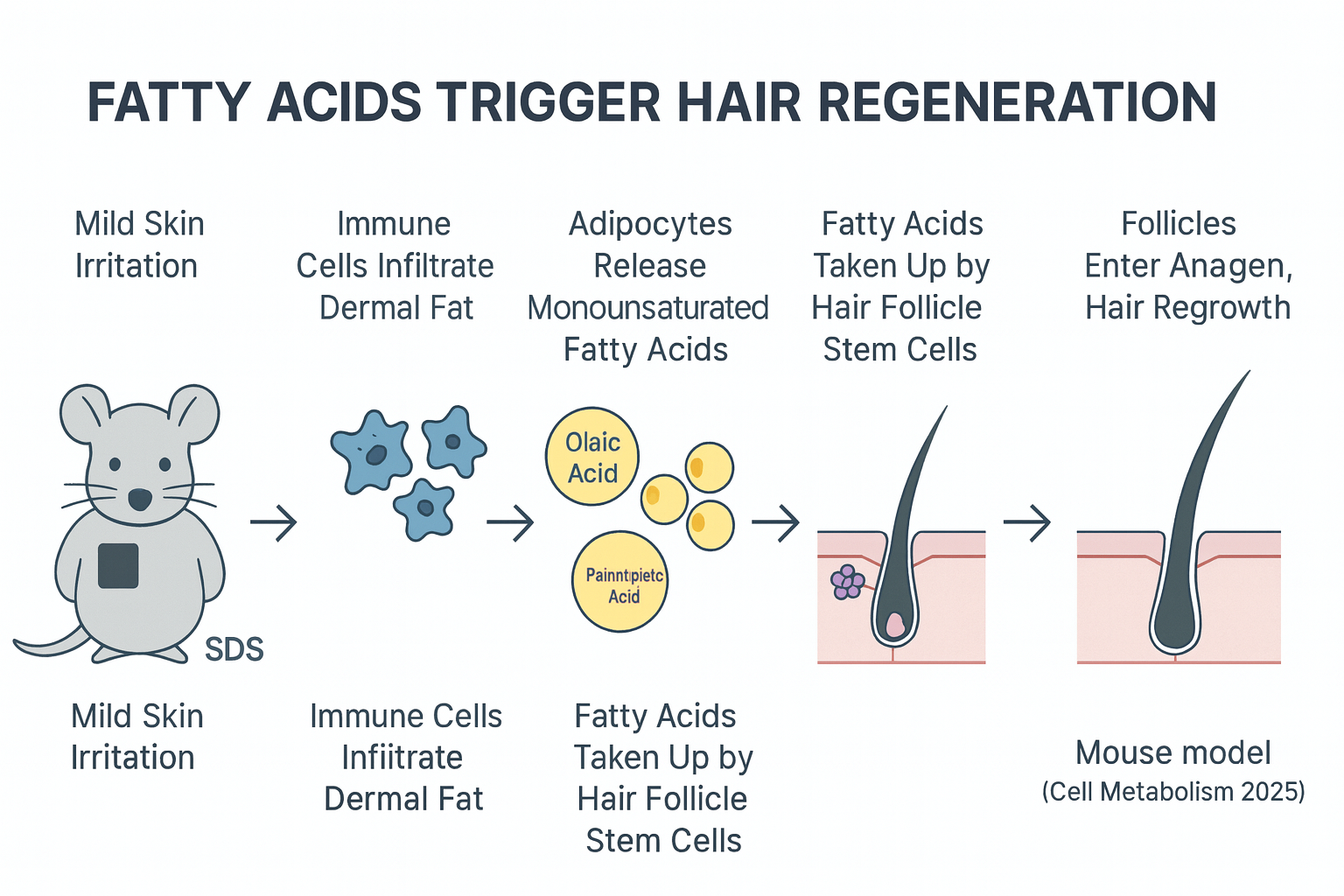
Classic hypertrichosis around injury sites looks like a biological overcorrection. The Cell Metabolism study connects several dots:
- Trigger: a mild irritant such as SDS creates a controlled, eczema-like rash.
- Immune relay: macrophages flood into the subcutaneous fat layer beneath skin.
- Adipocyte response: those fat cells undergo lipolysis and release free fatty acids.
- Follicle switch: hair follicle stem cells import these fatty acids, altering their metabolic state and pushing them into an active, regenerative program. Cell
We’ve known for years that adipocytes and follicles “talk.” The novelty here is a crisp mechanism that puts fatty acids at the center of the conversation and shows a practical way to harness that signal topically. Prior literature has also explored follicle–adipocyte crosstalk from other angles, supporting the general idea that local fat biology can modulate hair cycling. PMC
What are fatty acids, exactly?
Fatty acids are the building blocks of fats and oils. Chemically, they are long hydrocarbon chains with a terminal carboxyl group. Some are saturated, some are monounsaturated, some are polyunsaturated. Your body burns them for energy, builds membranes with them, and uses them as signaling molecules.
Different fatty acids slip through skin with different ease, can alter barrier properties, and can serve as carriers for other molecules. In topical formulations, certain monounsaturated fatty acids are known penetration enhancers that can change how the stratum corneum behaves. PubChem
In the Taiwan study, monounsaturated fatty acids, especially oleic acid and palmitoleic acid, were the stars. Delivered in the right solvent system, they appear to be taken up by follicle stem cells and to kick off a pro-growth metabolic program similar to what the injury-induced fatty acid burst would do. Cell
The other chemical players
Let’s quickly define the three ingredients you asked about: SDS, oleic acid, and palmitoleic acid.
1) Sodium dodecyl sulfate (SDS)
- What it is: An anionic surfactant you’ll find in many cleansers and shampoos. It creates foam, lifts oils, and, in higher concentrations, irritates skin. In research, SDS is often used to provoke a mild, controlled dermatitis model. PubChem
- Why it’s here: In the mouse model, SDS was the “spark” for the injury-immune-fatty acid cascade that woke follicles. It is not a recommended DIY hair growth treatment. It’s a lab tool for creating a reproducible irritation response. Cell
2) Oleic acid
- What it is: A monounsaturated omega-9 fatty acid abundant in olive oil and human fat. It is a known skin penetrant and is commonly used in topical and cosmetic formulations. PubChem
- Why it matters: In the study’s topical, oleic acid is part of the “signal” that seems to push follicle stem cells toward growth, emulating the injury-induced fatty acid surge without the irritation. Cell
3) Palmitoleic acid
- What it is: A monounsaturated omega-7 fatty acid present in human adipose tissue and in oils like macadamia and sea buckthorn. PubChem
- Why it matters: Partnered with oleic acid in the serum, palmitoleic acid appears to help reproduce the hypertrichosis-like growth signal. Again, this is mouse data, but it’s consistent with the adipocyte-to-follicle mechanism mapped in the paper. Cell
How is the research progressing?
The core science
- The Cell Metabolism paper offers a mechanistic map: macrophage infiltration after injury, adipocyte lipolysis, fatty acid release, stem-cell uptake, metabolic reprogramming, and hair regeneration. It’s not a hand-wavey “inflammation helps” story. The authors show lipidomics, genetic tools, and time courses that connect each step to the next. Cell
From injury to serum
- Once the team identified monounsaturated fatty acids as the mediators, they formulated a topical with oleic acid and palmitoleic acid and applied it to murine skin. Hair growth followed without the dermatitis. That finding is what sent the work into the news cycle because it hints at an easier consumer route. Cell
Patents and next steps
- Media coverage reports that the group has patented the formula and plans to test it on human scalps. The coverage is careful to note the difference between a promising mouse result and a proven human therapy. That distinction matters. Business Standard
Why this is exciting scientifically
- It validates the long-suspected crosstalk between skin fat and hair follicles, which earlier studies hinted at but didn’t operationalize for a topical. It also highlights metabolism inside stem cells as a lever you can pull from outside, by delivering a specific class of lipids through the skin. PMC
Why caution is still warranted
- Humans have a tougher skin barrier than mice, longer hair cycles, and diverse scalp microenvironments. What looks fast on mice might look slow in people. Early press also quotes the study’s senior author acknowledging that while the fatty acids may work in humans, they have not yet been proven in clinical trials. Sensible skepticism is healthy here. Newsweek
What’s fatty acid delivery doing at the follicle level?
The short version: hair follicle stem cells are metabolically flexible. The paper indicates that uptake of certain monounsaturated fatty acids shifts their metabolic wiring toward a state compatible with activation and regeneration.
Think of it like giving the stem cells the right kind of fuel at the right time. Add in the fact that oleic and palmitoleic acids are also decent skin penetration enhancers, and you get a plausible one-two punch: they get in, and they get used. Cell
Safety and common-sense guardrails
- Do not apply SDS to your scalp in hopes of growing hair. SDS is a lab irritant model, not a treatment. It can worsen dermatitis and damage barrier function, especially at high concentrations or prolonged contact. The mouse model proves a mechanism, not a home remedy. PubChem
- Fatty acids are not automatically risk-free. Oleic acid is widely used and generally considered safe in cosmetics, but concentration, solvent, frequency, and individual sensitivity all matter. Patch testing will be essential in any human study. PubChem
- Hypertrichosis is a condition, not a goal. While we are borrowing its biology as a shortcut to regrowth, you do not want uncontrolled or patchy overgrowth outside target areas. Clinical dosing and localization will be key.
When will a commercial product be available?
There is no confirmed launch date. Reports indicate the formula has been patented and that human-scalp testing is planned or beginning, but we do not yet have completed human trials, peer-reviewed human results, or regulatory clearance as a drug.
Some outlets speculate it could be sold over-the-counter as a cosmetic because the actives are common fatty acids, but that depends on jurisdiction, claims language, and safety testing. Assume years, not weeks, for anything that claims to treat hair loss clinically. Business Standard
So, does this mean I can just rub olive oil on my head?
Nice try, but no. Olive oil contains a lot of oleic acid, yet kitchen oils are messy mixtures with variable composition and no optimized delivery system.
The study’s point is targeted delivery of specific fatty acids at concentrations and in vehicles that actually reach follicle stem cells. That means formulation science, stability, penetration, and dose control. We will need human data to know what works and what doesn’t. Cell
Conclusion
Irritation can trigger growth, and the right fatty acids might do it without the rash
Let’s ground the takeaways in one sentence each:
- If you irritate skin with SDS, you can provoke a cascade where immune cells prompt fat cells to release fatty acids that in turn switch on hair follicle stem cells. In mice, that created visible regrowth in about 10–11 days on treated areas. This is a mechanistic demo, not a home treatment. Cell
- If you apply oleic and palmitoleic acids in a well-designed serum, you may be able to mimic the “good part” of that cascade and spark growth without the dermatitis, at least in mice. The team reports they have patented the formula and plan human testing. Time will tell how well it translates. Cell
It’s a clever idea: borrow a hypertrichosis-like trigger that biology already uses in injury repair, then deliver the key signal specific monounsaturated fatty acids directly, minus the inflammation. For now, it is exciting science and a valid new direction.
For treatment you can buy, we need controlled human studies, clear efficacy signals, safety data, and careful positioning. Until then, keep your expectations realistic, your scalp un-irritated, and your curiosity switched on.
References and further reading
- Tai KY, Chen CL, Fan SMY, et al. Adipocyte lipolysis activates epithelial stem cells for hair regeneration through fatty acid metabolic signaling. Cell Metabolism. Online ahead of print Oct 22, 2025. doi:10.1016/j.cmet.2025.09.012. Primary paper describing the injury-fatty acid-follicle mechanism and the topical fatty-acid approach. Cell
- PubMed record for the above article, including author affiliations and date. PubMed
- Schmidt B, Horsley V. Unraveling hair follicle-adipocyte communication. Trends in Endocrinology & Metabolism. Background on follicle-fat crosstalk. PMC
- Hypertrichosis overviews: StatPearls and DermNet. Useful for definitions, types, and distinctions from hirsutism. NCBI
- Sodium dodecyl sulfate chemistry and safety: PubChem and Wikipedia summaries for general readers. PubChem
- Oleic acid chemistry and topical notes: PubChem records. PubChem
- Palmitoleic acid chemistry and sources: PubChem and Natural Products MRD. PubChem
- News coverage that summarizes the work and includes quotes from the authors about potential human applications: Newsweek; Business Standard roundup referencing the Cell Metabolism study and patent plans. Treat these as lay summaries, not primary data. Newsweek
Some viral articles and forum posts are circulating, often with “20 days to regrow hair” headlines. They are referencing the mouse time frame, not human results. Always trace claims back to the primary paper and remember that mice and men grow hair on very different timelines. Cell
Medical Disclaimer
This content is educational, and not medical advice. Do not try to provoke dermatitis on your scalp to grow hair. Always consult a licensed clinician before starting, changing, or stopping any drug, supplement, or health regimen, especially if you have medical conditions or prescriptions.
Even at recommended doses, side effects can occur, and risks remain. By using this content, you agree we are not liable for any outcomes.
Reading this does not create a doctor-patient relationship. The authors and publishers disclaim all liability; you are solely responsible for how you use this information and any supplements.
Struggling with hair loss or thinning?
Get results with our 90-Day Hair Restoration Regimen—backed by science and proven methods. This e-book gives you a step-by-step plan to restore thicker, healthier hair naturally. Ready for real change?
Download now at Otter Hair Labs and start your journey to regrowth today.
